

Building trust in teams is one of the key elements to creating an effective and high-performing team. As Stephen R. Covey has put it, “Trust is the highest form of human motivation. It brings out the very best in people.” And I think you would have trouble finding someone who would dispute that statement. So when I tell you that studies have shown that 61% of Canadian employees and 3 in 4 American workers don’t trust their employers and senior management, you can be certain that building trust is a crucial and tremendous challenge.
But why is it so difficult? And why is there so much distrust in today’s workforce? The elements that form the basis of a trusting relationship are actually rather straightforward. But being consciously aware and actively engaged in these habits and elements is what makes the difference.
That being said, let’s take a look at these 9 things you need to keep in mind when building trust in teams.
1. Building Trust in Teams Through Competence
Personally, I find competence to be the most important element. It may just be me, but I think many others will agree that it is almost impossible to trust someone who you don’t believe has the competency to perform the job well. I’ll admit that I’m a little bit of a control freak when it comes to my work, and it takes a while for me to trust someone completely.
Now you may be on the other side of the spectrum. Maybe you’re someone who likes to give people chances to prove themselves. Give them the benefit of the doubt. But whichever side of the spectrum you’re on, there’s no denying that competency plays a big role.
It is your job as a leader to ensure that team members have the competence they need to be effective. Hire better, train better, or even fire better – whichever you choose, choose wisely!
How to Build a Competency Profile With AtmanCo
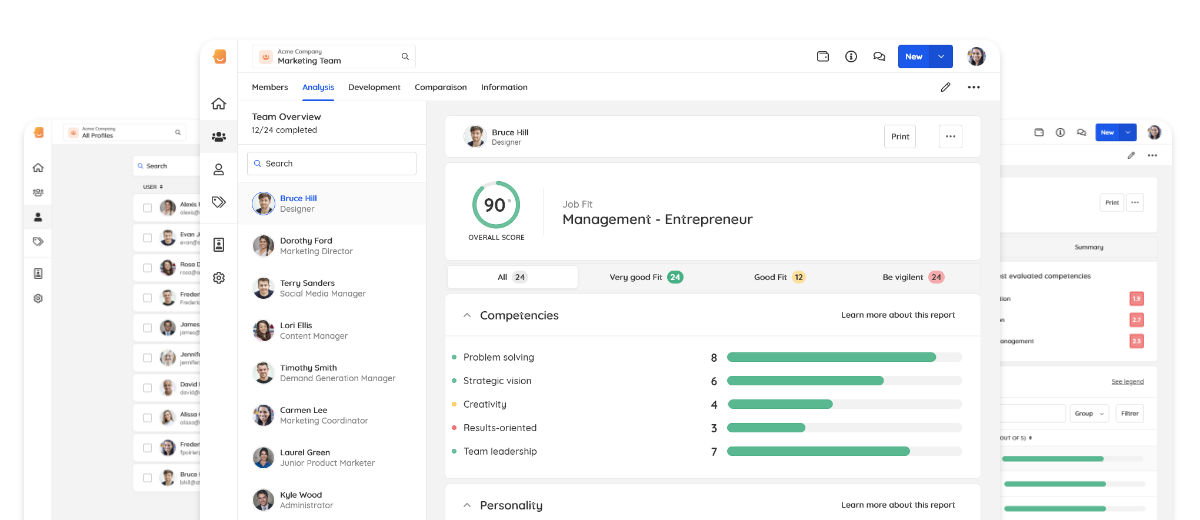
A competency profile (sometimes referred to as a skills profile) is often created and used in organizations to evaluate candidates for a specific job, but also to establish a professional development plan for employees based on the needs required for a position.
2. Improve Consistency
Clear and simple. If you want people to trust you, you are going to have to make sure you are consistent in everything you say or do. Doing it once or twice isn’t enough; you have to maintain that consistency for as long as you want the trusting relationship to continue.
Also, be sure to promote and encourage this consistency if you are looking to build trust within your teams. Make it easy for everyone to be consistent by creating an open environment that encourages trust and openness without fear.
3. Act with Integrity
Integrity is crucial to business as a whole, but even more so when it comes to trust-building within teams. Whether you agree or not, you should know that leaders’ integrity is directly related not only to the integrity and trust of their followers, but also to their overall performance and satisfaction with the leader1.
4. Building Trust in Teams Needs Authenticity
People trust you when you are genuine and authentic, not a replica of someone else.2
Enough said.
5. Pay Attention to Emotional Intelligence
We all know the importance of leadership with emotional intelligence. Having the self-awareness, self-regulation, motivation, social skills, and empathy associated with being emotionally intelligent will help you become better at building trust in teams.
How to Cultivate Emotional Intelligence
Emotional intelligence is a key factor to achieving success, be it on the personal or professional level. Moreover, it is paramount when it comes to management, especially leadership!
6. Prioritize Transparency
Don’t be afraid to show your vulnerability. Be transparent with your team, even when the truth may be unpopular or inconvenient.
– Bill George
This point is particularly important given the fragility of trust. The second a person feels that things aren’t open and transparent, that there may be something else going on, is exactly when the trust starts fading away.
It’s a shame, too. Building trust in teams takes time, and to lose it all in a fleeting moment is unfortunate. And if you have ever tried to rebuild trust after it has been marred by dishonesty or a lack of openness, you know that it is even a bigger challenge to overcome.
Employees and team members need this transparency and openness in order to be able to truly trust their leaders. So be sure that transparency is an integral part of your team’s modus operandi, and remember that it all starts with you.
7. Reinforce Communications
Yes, I know. There are very few lists out there that don’t include “communication”! But it is what it is: communication is important.
And don’t think that you’re a good communicator just because you’ve never received a complaint. Ask yourself:
- Is your communication reinforcing trust and respect?
- Is it motivating and encouraging?
- Is it improving engagement?
If you can’t definitively answer “yes” to these questions, then it may be time for a little self-reflection.
8. Trust Reciprocity
A man who trusts nobody is apt to be the kind of man nobody trusts.
– Harold MacMillan
You have to give trust to earn it. Don’t ask your team members to do something you are not willing to do yourself, and if you want them to trust you, then be sure to trust them in return.
Ask yourself, what do you do that conveys to your team that you trust them? Better yet, ask yourself if there are things you do that convey distrust. That could be something worth thinking about!
9. Give It Time
Earn trust, earn trust, earn trust. Then you can worry about the rest.
– Seth Godin
Above all, trust needs time.
It takes time for you to trust others, and it takes time for you to earn the trust of those around you. You can do everything on this list right, but that doesn’t mean you can build trust overnight.
It takes time to demonstrate authenticity and integrity, to prove consistency and competence, to improve your communication style and channel your emotional intelligence. Just thinking about how long it takes to build a truly trusting relationship is making me wonder if I should’ve included “Patience” in this list as well!
What Else Should We Keep in Mind When Building Trust in Teams?
Let’s face it, this is not going to be easy. Even if the elements on this list seem straightforward, we are still human. We get tired, we make mistakes, and it’s hard to focus on building trust when you have a million things going on around you. But the stats I presented at the beginning of this article are concerning and cannot be ignored.
You can start off with team-building sessions, team profiles, or even psychometric assessments. These can create a solid foundation for applying the elements discussed here and building trust in your teams. Share your thoughts and ideas in the comments below!
References
1 Palanski, M. E., & Yammarino, F. J. (2009). Integrity and leadership: A multi-level conceptual framework. The Leadership Quarterly, 20(3), 405-420.
2 George, B., Sims, P., McLean, A. N., & Mayer, D. (2007). Discovering Your Authentic Leadership. Retrieved January, 2016, from https://hbr.org/2007/02/discovering-your-authentic-leadership/